
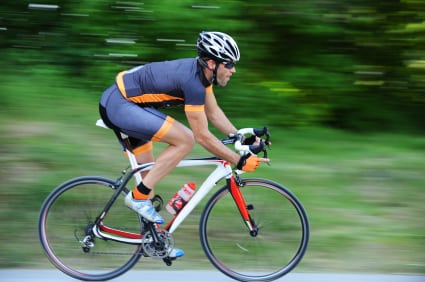
Taking part in a cyling endurance event this summer? Read our 10 top tips for staying injury free and making it to the end!
I recently spent the weekend with my brother, Anthony, and his wife who live just outside Salisbury. Anthony has recently given up full time GP practice and now just helps out one day a week at a lovely, little, local practice.
Alongside his long career as a GP my brother has worked as the doctor for many charity bike rides. This has combined his love of cycling, travelling, photography and medicine as well as helping to raise a huge amount for various charities.
He has also learnt a thing or two about how to avoid injury and make it to your final destination in one piece!
Exciting announcement!
I’m proud to announce that Physio on the River is going to be one of the sponsors for the parents of Barnes Primary School who have formed a team of 42 cyclists and will be riding to Amsterdam this June to raise money for the school. We are keen to help them every way we can. So when visiting my brother I asked him for his top tips for doing a long cycling event like the one to Amsterdam. Together with some of our own ideas, here are 10 pieces of good advice.
Our 10 top tips for staying the distance
1. Gears
Get used to your gears – REALLY used to your gears. Otherwise you will simply get exhausted and you won’t make the distance.
2. Speed
You should be pedalling between 60-90 revolutions per minute. If you are going much faster, you will never make it to Amsterdam or wherever your heading.
3. Handlebars
Don’t grip the handlebars tightly. Get used to holding them loosely and let your elbows relax. Otherwise you can end up with Tennis Elbow or Carpal Tunnel syndrome (irritation of the nerve that passes across the front of your wrist and supplies your thumb, index and middle fingers).
You might even consider wrapping more sponge around your handlebars so you can’t grip as tightly. The padding will also provide more cushioning, so you are less likely to develop Carpal Tunnel syndrome.
4. Bums are less important than knees!
If you suffer from knee problems, have your saddle a little higher. If it’s too low your knees won’t make it to Amsterdam, but your bum will and it’s no good if you can’t walk when you arrive!
5. Saddles
Don’t wear a saddle cover because they slip around and can blister your bum. Get yourself a gel saddle but not a gel saddle cover. Don’t get anything with hair on it. Anthony once saw someone with a tiger fur covered saddle and the rider only lasted two hours! It just creates too much friction where you really don’t want friction…..
6. Training tips
When training don’t forget to throw in some swimming, especially backstroke as it’s great for strengthening your back and your back will take a lot of punishment on the ride. You want it to be strong and supple. It’s a great antidote to all that crouching over the handlebars.
In fact, my physio team and I would recommend plenty of variety in your training – not just cycling. Just like any big sporting event, addressing all aspects of fitness will help your performance.
Something like yoga or a stretching regime can help with flexibility. Hip flexors which cross the front of your hips, can get very short and tight in cyclists.
Pilates exercises are great for improving your core strength. For your legs to power you efficiently you will need a strong core from which your leg muscles can work.
As mentioned earlier swimming is both good for back muscles and good for fitness. Going to the gym to strengthen your leg muscles is essential and whilst there, work on your aerobic fitness with some cardio work like rowing, running and cross trainer. Perhaps not cycling as I’m sure you will be spending plenty of time on that in your training already!
Try and mix up your training so you include a selection of activities through the week. If you need any help, several of our physiotherapists and instructors offer personal training at our clinic.
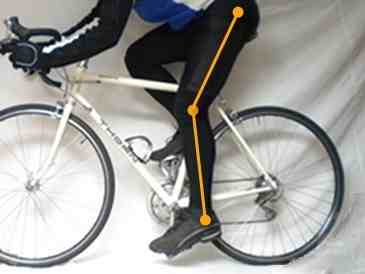
7. Bike fitting assessment
It’s important to make sure your bike is set up absolutely correctly for you, so seek out professional help.
8. Working proactively on injury prevention
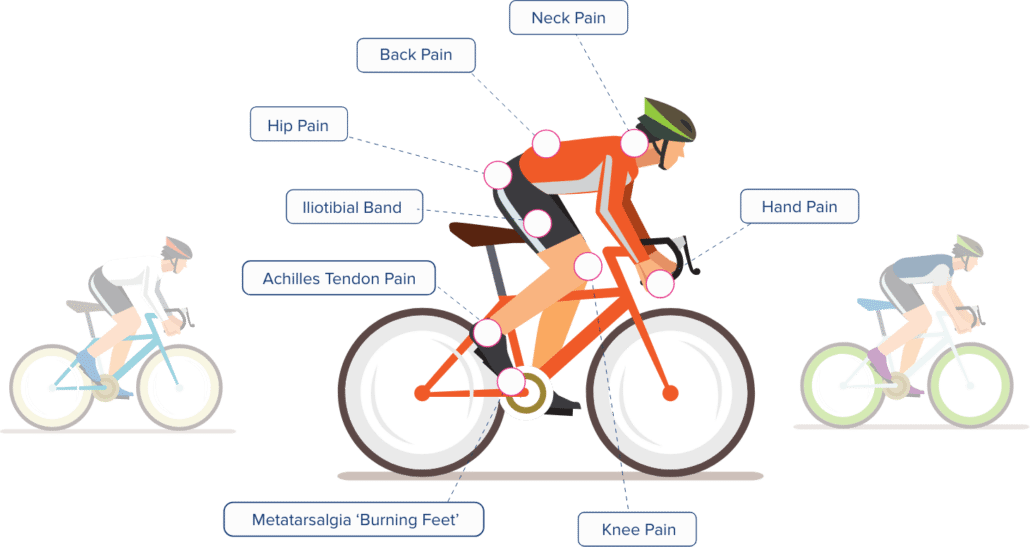
9. Getting your soft tissues in tip top condition
Many keen cyclists have a very sedentary day job. Spending lots of time in front of your computer can often lead to poor posture and tight hamstring, hip flexors, neck and back muscles. Having some regular sports massages can help to get your muscles and other soft tissues in the best condition.
The Massage Therapist can work on your tight muscle groups and improve your flexibility. Massage is also a useful way to aid recovery following the event. We have a team of three Massage Therapists who are all experienced in pre and post-event massage. In fact, Rachel is a triathlete herself, so knows all about preparation and recovery for big events.
10. Hydration and nutrition
Especially when abroad, use a capped water bottle. You are far less likely to get stomach problems – it’s amazing what the front wheel flicks up!
Anthony recommends that nibbling long-burn carbs/protein (nuts and fruit) is more fun than putting additives into your water bottle. The latter is only necessary on rides over 100k. Anthony advises to avoid meat at lunchtime as it ruins afternoon performance and isn’t needed.
He stressed the importance of ensuring you are pre-loaded with water at the start of your day. If you have not peed by 11 o’clock you should be worried. If you haven’t peed by 12.30, stop riding as dehydration lurks.
We hope you find these tips useful and we wish charity teams all the best for their endeavours over the summer months!
Next steps…..
If you are interested in a sports massage, personal training or our Yoga and Pilates classes, just:
Call our friendly Reception Team on 020 8876 5690 or email us here
Or simply pop in for a chat – we are always happy to chat things through first.

